Choosing a fibre optic cable becomes much easier once you know what is inside it. The glass, the layers around it and the way light travels through the core decide how far a link can go and at what speed. Below is a short summary of those points, with the main reference tables.
Why Fibre Is Made of Glass
A fibre sends data as light through very pure silicon dioxide (SiO₂) glass. The core has a slightly higher refractive index than the cladding, and this difference keeps the light inside the core by total internal reflection. The loss is very low, about 0.2 dB/km at 1550 nm in singlemode fibre, and electromagnetic interference has no effect because glass does not conduct electricity. Copper BASE-T links stop at 100 metres, while fibre reaches from a few hundred metres to tens of kilometres.
The Layers of the Cable
Only a few microns of glass carry the light. Every other layer protects that glass.
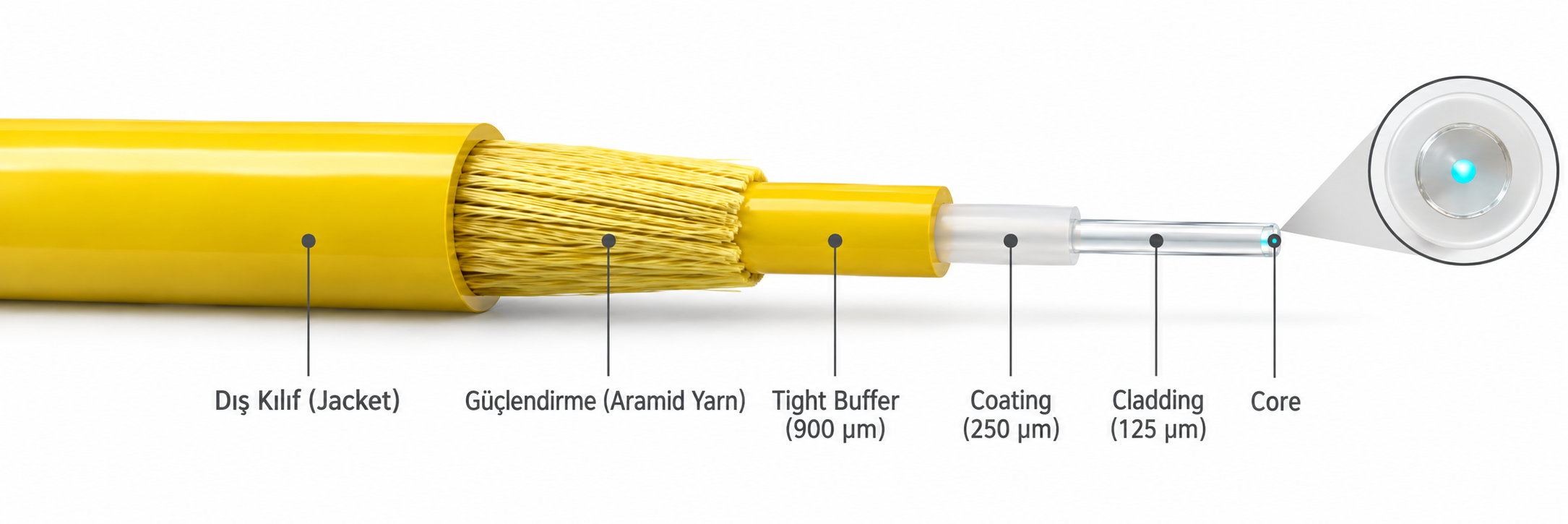
|
Layer |
Material / Structure |
Diameter / Size |
Function |
|
Core |
GeO₂-doped SiO₂ glass |
Singlemode: 8-9 µm
Multimode: 50 / 62.5 µm |
The core in which the light is carried |
|
Cladding |
SiO₂ glass |
125 µm |
Keeps the light inside the core |
|
Coating |
Acrylate coating |
About 250 µm |
Protects the glass fibre mechanically |
|
Tight buffer |
Plastic buffer layer |
900 µm |
Provides additional mechanical protection and allows the fibre to be terminated with a connector |
|
Strength member |
Aramid yarn (Kevlar) |
- |
Carries the tensile force |
|
Outer jacket |
PVC / LSZH |
About 2-3 mm |
Provides the outer protection of the cable |
Indoor cables usually have a tight buffer and a PVC or LSZH jacket. Outdoor cables use loose tubes, water-blocking material, steel armour and a UV-resistant PE jacket.
Cable Types
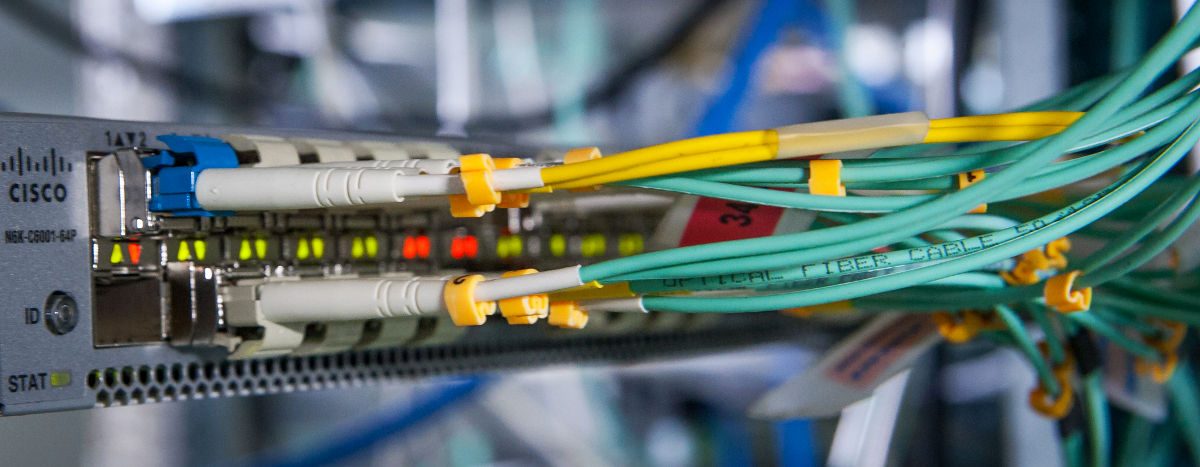
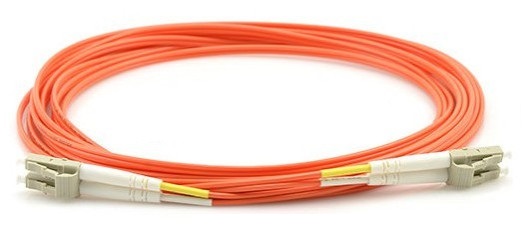
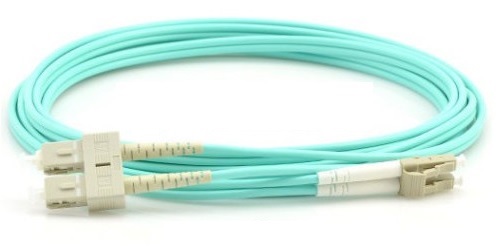
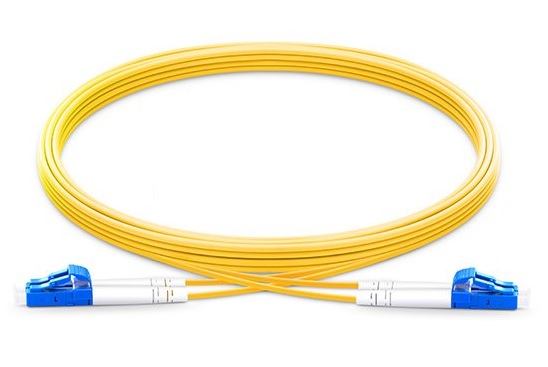
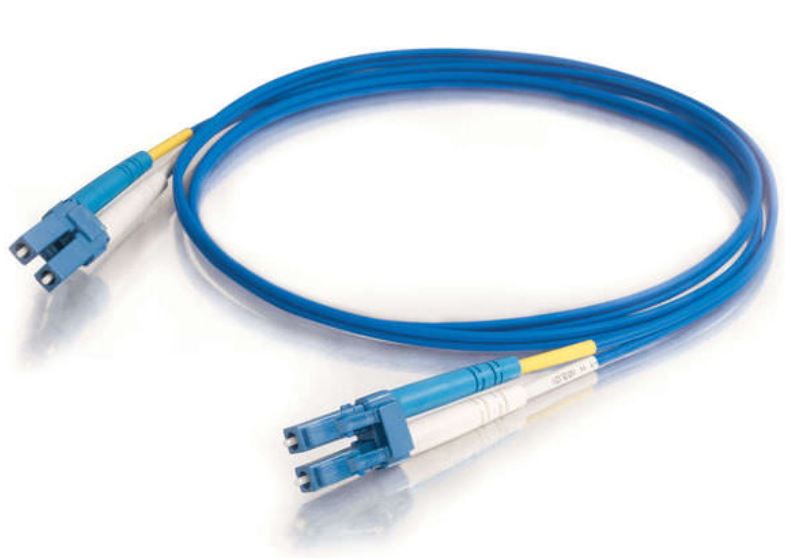
Zipcord is the duplex patch cable of the server room: 2 fibre lines, one for TX and one for RX, usually with LC or SC connectors. Bending it below the minimum bend radius raises the loss and can break the glass.
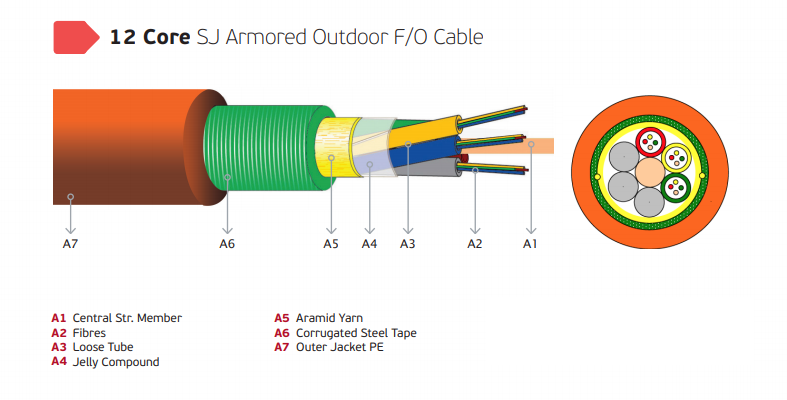
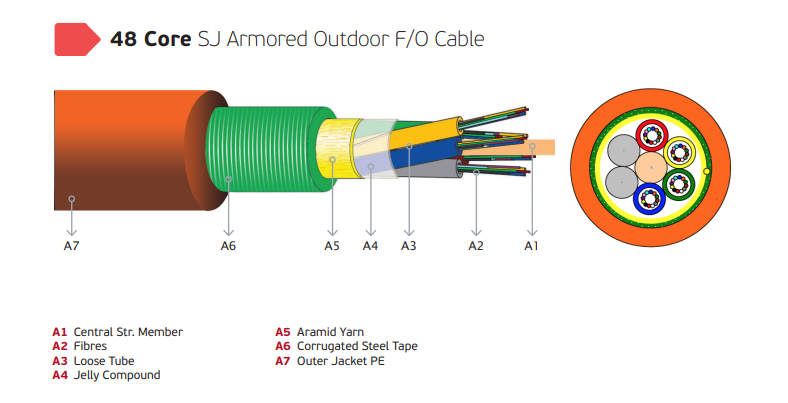
Multi-fibre cables place 12, 48, 144 or 216 separate fibres under one jacket for backbone routes between buildings, campuses and data centres. In the cross-sections below, the fibres sit in loose tubes around a central strength member, surrounded by jelly compound, aramid yarn, corrugated steel tape and a PE jacket.
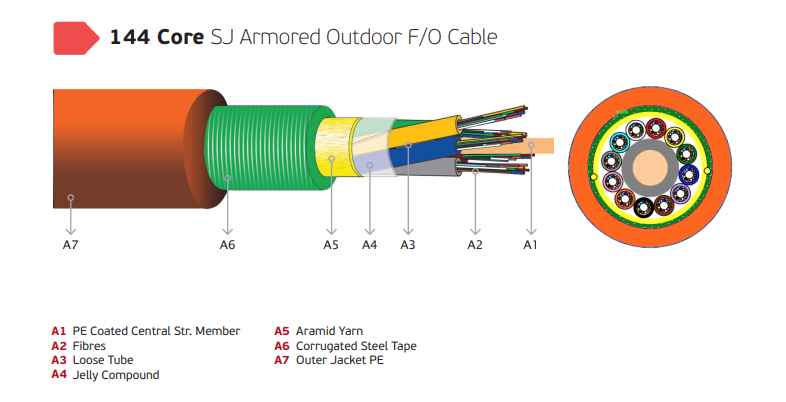
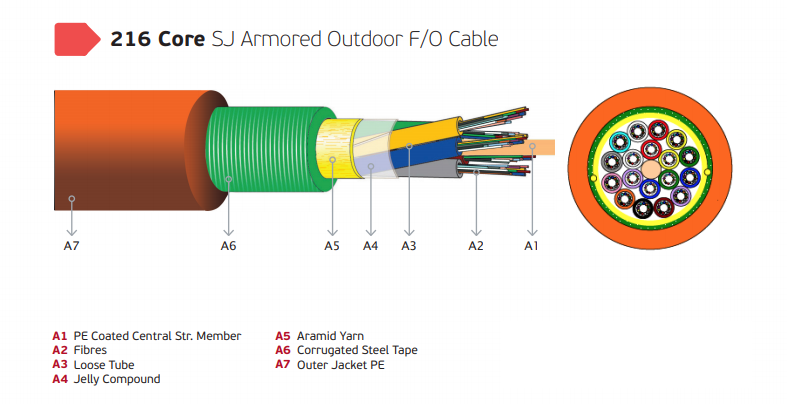
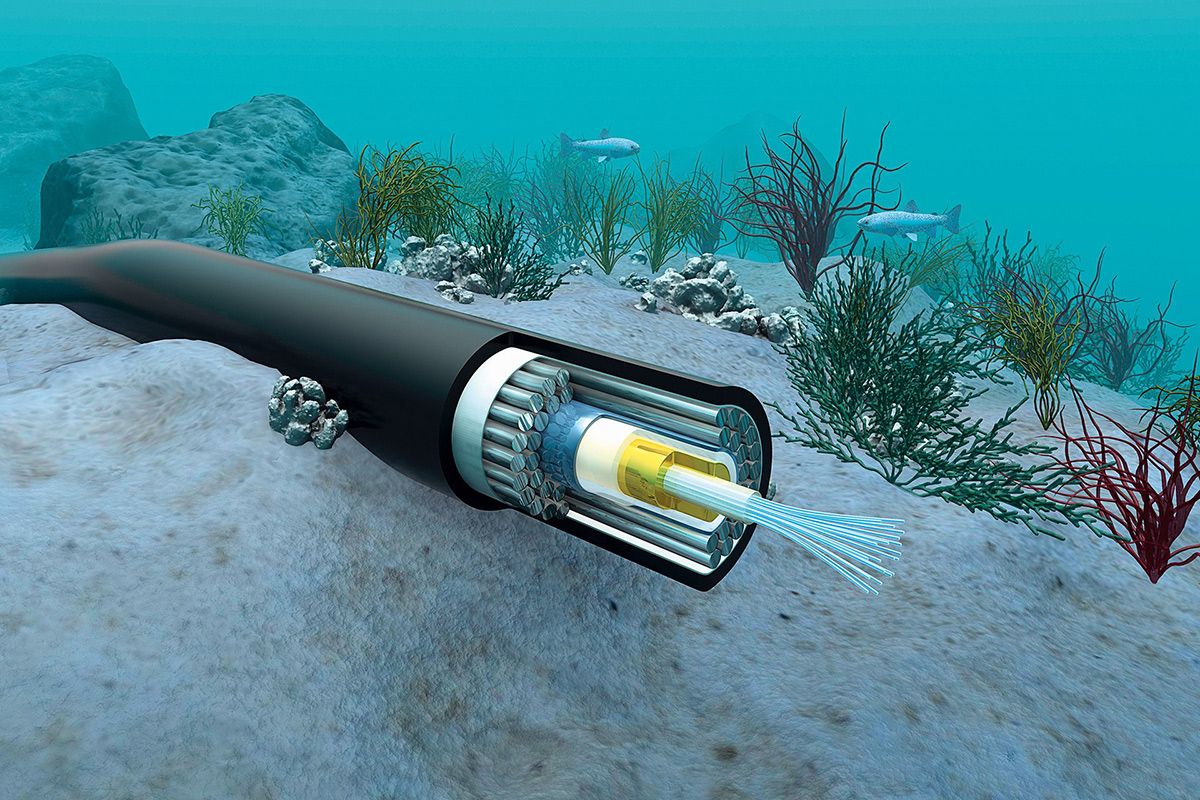
Multi-core fibre (MCF) is different: one fibre holds several cores inside a single cladding. It is used mainly in submarine systems, where space and power are limited, and it is not yet common in enterprise networks.


Multimode Fibre
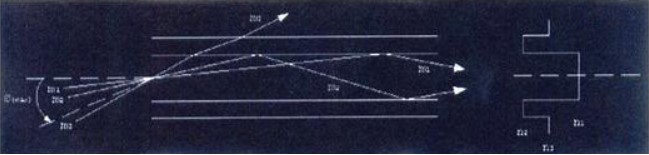
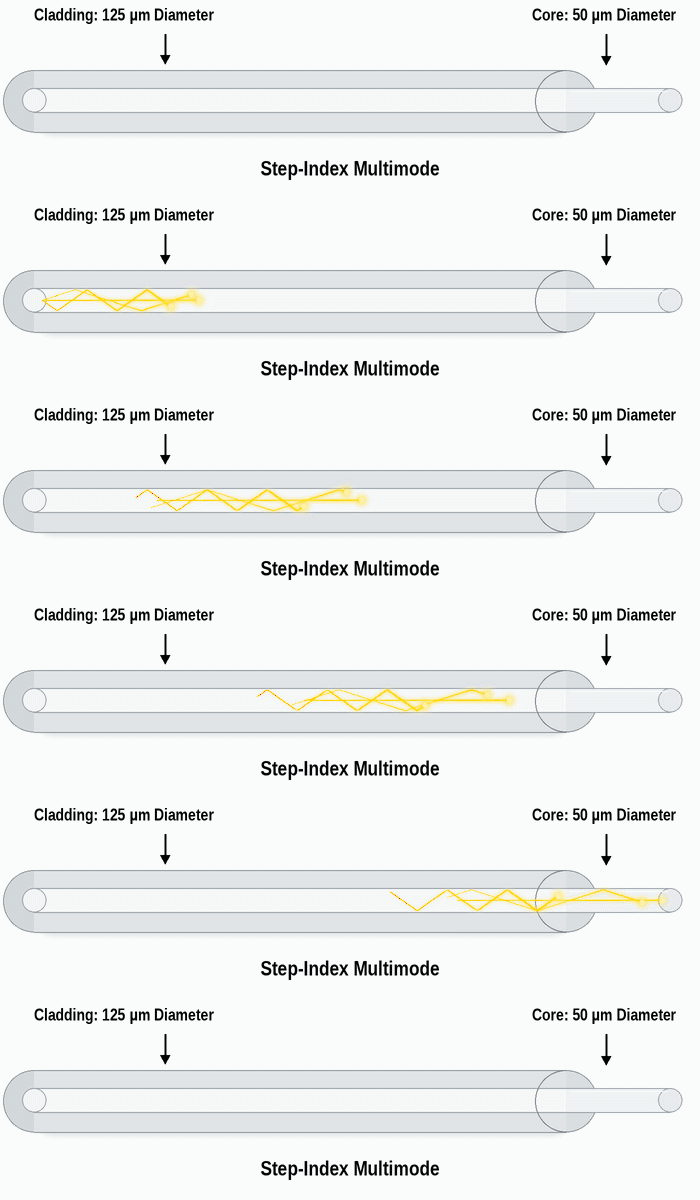
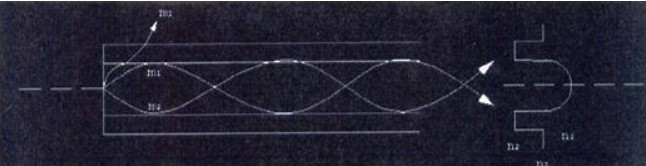
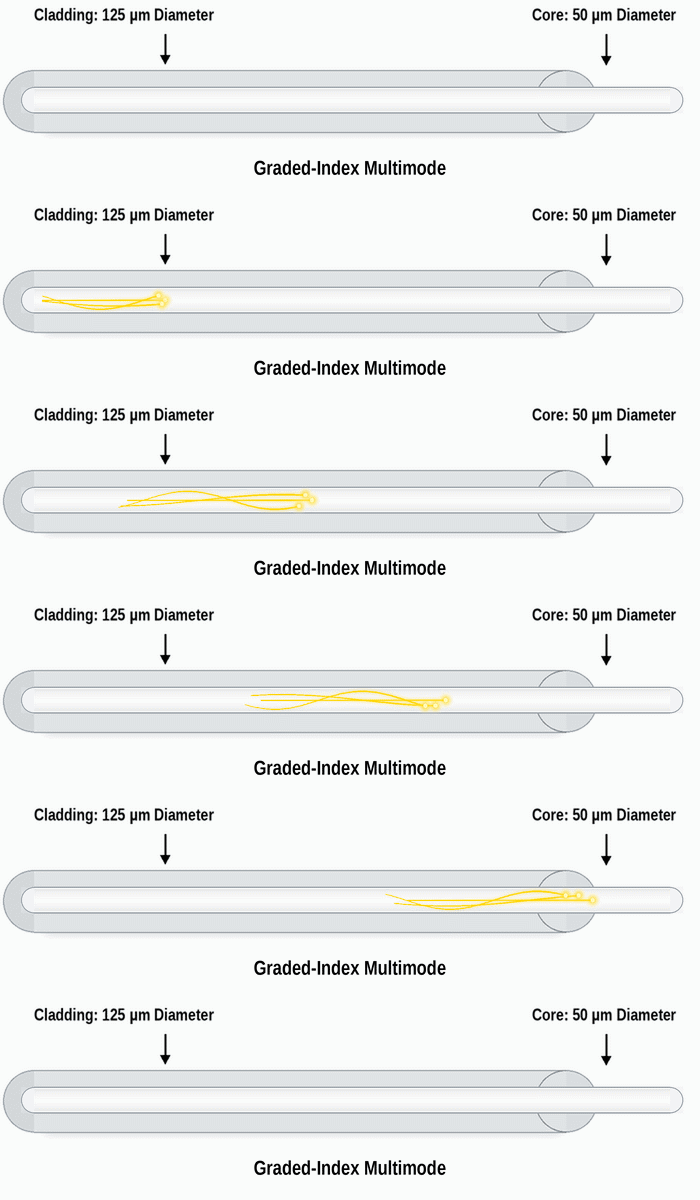
Multimode fibre has a wide core of 50 µm or 62.5 µm, so the light can take many paths. In a step-index core, all rays move at the same speed, and the rays on longer zigzag paths arrive late. This spreading of the pulse is called modal dispersion. A graded-index core corrects it: the refractive index falls from the centre towards the cladding, the outer rays move faster, and all rays arrive at almost the same time. Every multimode fibre used for Ethernet is graded-index.
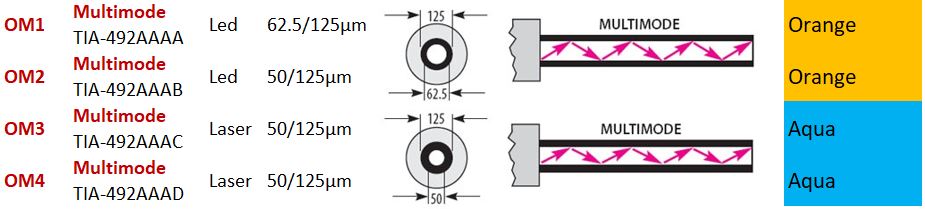
Graded-index fibre is sold in the classes OM1 to OM5. OM3 and above are optimised for VCSEL lasers, and OM5 adds support for several wavelengths on one fibre pair (SWDM). Jacket colour is only a guide, so always read the class printed on the cable.
|
Class |
Standard |
Core / Cladding |
Light Source |
Bandwidth |
Jacket Colour |
|
OM1 |
TIA-492AAAA |
62.5 / 125 µm |
LED (legacy); also supports laser-based optics such as 1000BASE-SX |
200 MHz·km (850 nm), 500 MHz·km (1300 nm) |
Orange |
|
OM2 |
TIA-492AAAB |
50 / 125 µm |
LED (legacy); also supports laser-based optics such as 1000BASE-SX |
500 MHz·km (850 nm and 1300 nm) |
Orange |
|
OM3 |
TIA-492AAAC |
50 / 125 µm |
Laser (VCSEL) |
EMB 2000 MHz·km (850 nm) |
Aqua |
|
OM4 |
TIA-492AAAD |
50 / 125 µm |
Laser (VCSEL) |
EMB 4700 MHz·km (850 nm) |
Aqua (Erika Violet is also used in Europe) |
|
OM5 |
TIA-492AAAE |
50 / 125 µm |
Laser, 850-953 nm SWDM |
EMB 4700 MHz·km (850 nm), 2470 MHz·km (953 nm) |
Lime Green |
The maximum distance depends on both the Ethernet standard and the OM class. A dash means that the standard is not defined for that fibre.
|
Standard |
Speed |
Wavelength |
OM1 |
OM2 |
OM3 |
OM4 |
OM5 |
100BASE-FX |
100 Mbps |
1300 nm |
2 km |
2 km |
2 km |
2 km |
2 km |
1000BASE-SX |
1 Gbps |
850 nm |
275 m |
550 m |
550 m |
550 m |
550 m |
1000BASE-LX |
1 Gbps |
1310 nm |
550 m (with MCP) |
550 m (with MCP) |
550 m (without MCP) |
550 m (without MCP) |
550 m (without MCP) |
10GBASE-SR |
10 Gbps |
850 nm |
33 m |
82 m |
300 m |
400 m |
400 m |
40GBASE-SR4 |
40 Gbps |
850 nm |
- |
- |
100 m |
150 m |
150 m |
100GBASE-SR10 |
100 Gbps |
850 nm |
- |
- |
100 m |
150 m |
150 m |
100GBASE-SR4 |
100 Gbps |
850 nm |
- |
- |
70 m |
100 m |
100 m |
On OM1 and OM2, 1310 nm optics such as 1000BASE-LX need a mode conditioning patch cord (MCP) at both ends. The SR4 and SR10 standards are parallel optics and use multi-fibre MPO/MTP connectors instead of a duplex LC.
Singlemode Fibre
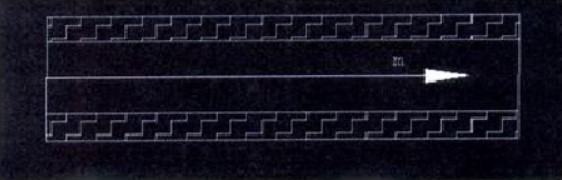
Singlemode fibre has a core of about 8-9 µm and works with laser sources at 1310 nm and 1550 nm. Only 1 mode travels in the core, so there is no modal dispersion and links can run for many kilometres. Never look into a live fibre end or transceiver port, because this laser light is invisible and can damage the eye permanently.
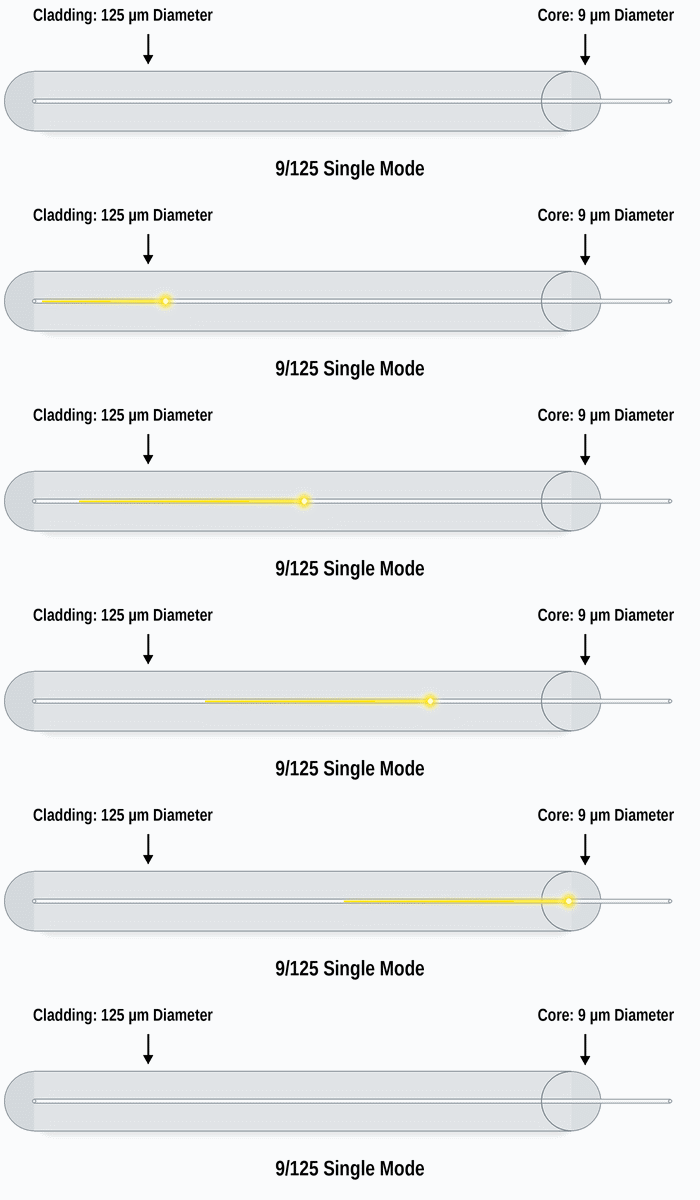
Singlemode cables come in 2 categories, OS1 and OS2. Both use ITU-T G.652 fibre, and OS2 has the lower attenuation limit, 0.4 dB/km, which makes it the usual choice for campus, metropolitan and long-distance routes. On the connector side, blue means UPC polish and green means angled APC polish, and the 2 must not be mated.

The distances below are maximum reaches. A real link reaches them only when the fibre type, the transceiver's power budget and the total loss of the link all meet the standard. Entries marked as vendor-defined are not IEEE standards, so check the transceiver datasheet for them.
|
Standard |
Speed |
Wavelength |
Distance |
Defined By |
100BASE-LX10 |
100 Mbps |
1310 nm |
10 km |
IEEE 802.3ah (Clause 58) |
1000BASE-LX |
1 Gbps |
1310 nm |
5 km |
IEEE 802.3z (Clause 38) |
1000BASE-LX10 |
1 Gbps |
1310 nm |
10 km |
IEEE 802.3ah (Clause 59) |
1000BASE-EX |
1 Gbps |
1310 nm |
40 km |
Vendor-defined |
1000BASE-ZX |
1 Gbps |
1550 nm |
70 km |
Vendor-defined |
10GBASE-LR |
10 Gbps |
1310 nm |
10 km |
IEEE |
10GBASE-LX4 |
10 Gbps |
4 wavelengths in the 1310 nm band |
10 km |
IEEE |
10GBASE-ER |
10 Gbps |
1550 nm |
40 km |
IEEE |
10GBASE-ZR |
10 Gbps |
1550 nm |
80 km |
Vendor-defined |
40GBASE-LR4 |
40 Gbps |
4 wavelengths in the 1310 nm band |
10 km |
IEEE |
40GBASE-ER4 |
40 Gbps |
4 wavelengths in the 1310 nm band |
40 km |
IEEE |
100GBASE-LR4 |
100 Gbps |
4 wavelengths in the 1310 nm band |
10 km |
IEEE |
100GBASE-ER4 |
100 Gbps |
4 wavelengths in the 1310 nm band |
40 km |
IEEE |
Which Fibre to Choose
Multimode suits links of up to a few hundred metres inside a data centre or a building. For new multimode cabling, OM4 is a sound default, and OM5 makes sense where SWDM is planned. Singlemode OS2 is the better choice between buildings, between campuses and outdoors, because its speed can be raised later by changing only the transceivers. Decide on distance, target speed and Ethernet standard together before ordering the cable.
I hope you find it useful...
Feel free to share your thoughts and questions about this video in the comments below. Every contribution helps the content reach more people and makes for a more useful discussion.